Call Now: 405-601-4227

Current Patient And Need To Get In Touch?
Contact Us Here
Call Now: 405-601-4227
Disc Injuries
Home » Services & Conditions Treated » Disc Injuries
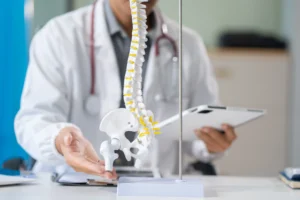 Disc injuries are one of the most common sources of neck and back pain, and they range from mild irritation to severe nerve compression that makes it difficult to sit, stand, or move without pain. The discs in your spine act as cushions between the vertebrae, and when they are damaged, pressure on the surrounding nerves can produce pain, numbness, and weakness that radiates far beyond the spine itself. If you have been dealing with back or neck pain that is not improving, a disc injury may be the source.
At Comprehensive Spine and Pain, our physicians provide advanced, in-office treatment for disc injuries without requiring a hospital visit. Call us at (405) 601-4227 or contact us online to schedule your appointment.
 Spinal disc injuries require precision. The location of the affected disc, the degree of nerve involvement, and whether the spine has already been operated on all change what treatment looks like. A provider who handles only one type of care, medication only or injections only, cannot put together a plan that accounts for all of that. We can.
Our four double-board-certified physicians perform the full range of spinal interventional procedures, including epidural steroid injections at the cervical, thoracic, and lumbar levels, spinal cord stimulators, and intrathecal pain pumps, all in our own procedure rooms. If you have already had spinal surgery and are still in pain, we also treat failed back syndrome, which many practices are not equipped to manage. You get the same physicians overseeing every step, from your first evaluation through your last follow-up.
The spine contains discs at every level from the neck down to the lower back, and injuries can occur anywhere along that column. The most common types include:
Each of these conditions can affect the cervical, thoracic, or lumbar spine, and symptoms vary depending on the injury’s location and severity.
Symptoms depend on which disc is affected and whether nearby nerves are involved. Some people experience localized pain at the injury site. Others have radiating symptoms that travel into the arms, hands, legs, or feet.
Symptoms of a disc injury may include:
When chronic pain from a disc injury is left unaddressed, it can begin to affect sleep, mobility, and quality of life in ways that go well beyond the original injury.
 Our pain management physicians provide targeted treatments that address disc-related pain at the source rather than simply managing symptoms.
Epidural steroid injections, delivered either interlaminar or transforaminal depending on the location and type of injury, reduce nerve inflammation and provide significant relief for many patients. Medial branch blocks and radiofrequency ablations target the specific facet joint nerves that become painful when a damaged disc alters spinal load and mechanics.
For patients with severe or treatment-resistant pain, spinal cord stimulators offer a longer-term solution by modifying pain signals before they reach the brain.
The right approach depends on which disc is affected, how advanced the injury is, and how your body has responded to prior treatment. Having all these options available within one practice means your plan can be adjusted as your condition evolves without having to start over with a new provider.
Some bulging or herniated discs do improve over time with rest and conservative care. However, when symptoms involve nerve compression, significant weakness, or pain that limits daily function, waiting without treatment often prolongs suffering and can allow the condition to worsen. An evaluation helps determine whether active treatment is needed.
General muscle strain and disc injuries can feel similar in the early stages. Disc injuries are more likely when pain radiates into an arm or leg, when there is numbness or tingling, or when symptoms worsen with specific movements like bending forward or sitting for extended periods. Imaging is the only way to confirm a disc injury.
Yes, when performed by a trained specialist. Epidural steroid injections are one of the most widely used and well-studied interventional treatments for disc-related pain. They are performed in the office under fluoroscopic guidance to ensure accurate placement and are generally well tolerated.
You do not have to keep pushing through back or neck pain without answers. Comprehensive Spine and Pain offers advanced, in-office interventional care for disc injuries, managed by our physicians who handle your entire treatment plan under one roof.
Call us at (405) 601-4227 or contact us online to schedule your appointment today.