Call Now: 405-601-4227

Current Patient And Need To Get In Touch?
Contact Us Here
Call Now: 405-601-4227
What Is Complex Regional Pain Syndrome (CRPS)?
Home » Oklahoma City Chronic Pain Management » What Is Complex Regional Pain Syndrome (CRPS)?
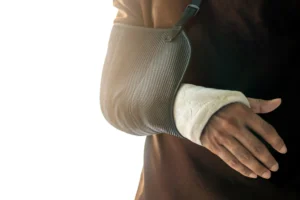 A sprained ankle or a mended wrist fracture should stop hurting once the bone or ligament heals. When the pain instead grows louder and spreads long after the tissue should have recovered, you may be looking at complex regional pain syndrome (CRPS), a nerve-driven condition that behaves nothing like an ordinary injury.
The pain can feel wildly out of proportion to whatever initially set it off, and a light bedsheet or a puff of air is sometimes enough to trigger it. For someone living with CRPS, that mismatch is exhausting, confusing, and far too easy for others to dismiss because there is no obvious wound to see.
At Comprehensive Spine and Pain, our chronic pain specialists work with this condition regularly and handle testing, injections, and follow-up for it directly. Call 405-601-4227 or contact us online to set up a consultation.
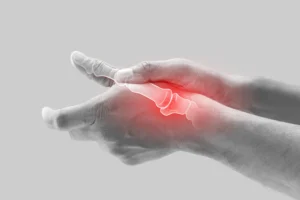 CRPS almost always follows a physical trigger, usually an injury or surgery, even though the resulting pain outlasts and overshadows that first event. Doctors do not fully understand why one person develops it after a small injury while another with the same injury never does.
Some injuries set off complex regional pain syndrome far more often than others, and the pattern holds steady from one patient to the next. The starting points our team sees most often are the following:
A tight cast or a long spell of not moving the limb can add to the risk, since the area loses its normal input and grows more sensitive over time. That is one reason gentle, guided movement matters so early in recovery.
Injury is only half the picture, because a handful of personal factors make the condition more likely to take hold in the first place. Our providers look harder at stubborn pain when several of these line up:
Having one of these traits does not mean the condition is coming, and plenty of people develop it with no risk factors at all. Still, the overlap helps our team decide how closely to investigate pain that points toward a nerve disorder.
The clearest signal is pain that is far worse than the injury should cause and does not fade on the normal timeline. Changes in the skin and temperature of that same limb usually show up right alongside it.
The condition usually announces itself through a cluster of changes in one arm or leg rather than through any single symptom on its own. Keep a close eye on the affected limb for the following:
Because these signs overlap with ordinary swelling from a healing injury, they get brushed off for weeks, which lets a fixable problem slide toward long-term chronic pain. Sorting out what belongs to a routine recovery and what belongs to CRPS is exactly where a pain specialist earns their keep.
Doctors sort the condition into two forms based on whether a specific nerve was damaged. Most cases take the first form, linked to an injury or illness that never directly harmed a single nerve.
The label your care team assigns changes what they look for during testing and imaging down the line. The practical difference between the two forms of complex regional pain syndrome comes down to the following:
Both forms cause similar day-to-day symptoms, and the treatment paths overlap heavily between them. Pinning down the type still helps your care team choose which tests will actually add useful information.
No single blood test confirms the condition, so diagnosis leans on your history, a hands-on exam, and tests that rule out other causes. Because the symptoms can mimic a slow-healing injury, an outside eye trained in nerve pain makes the difference.
A thorough workup does more than put a name to the pain, since it also guides your treatment and flags anything that needs faster action. A typical evaluation with our team may include several of these steps:
Because early treatment tends to work better than treatment started late, our providers move from evaluation to a plan quickly. The aim is to calm the overactive pain signaling before it settles in for good.
Treatment is rarely a single fix, and the strongest, longest-lasting results usually come from combining several approaches rather than betting on one. Our physicians draw on a toolkit that includes options such as these:
At our Oklahoma pain clinics, you will not need a hospital admission for these procedures. Most stimulator trials and injections happen in on-site procedure rooms, and patients head home the same day.
Sympathetic and diagnostic nerve blocks sit among the tools our physicians reach for most with this condition, and starting them early gives the limb its best shot at staying functional.
Comprehensive Spine and Pain brings together four double board-certified pain management doctors who handle both medication management and interventional pain care. Many practices offer one or the other and send you elsewhere for the rest.
That single-roof setup means fewer handoffs, shorter waits between a diagnosis and a treatment, and one team tracking your progress over the long haul. For a condition where early action makes a real difference, that continuity does real work.
It is uncommon. Population studies place the incidence at roughly 5.5 to 26 cases per 100,000 people each year, with women diagnosed four times more often than men. The spread in those numbers reflects how differently the condition gets counted from one study to the next.
Sometimes, yes. The pain can move beyond the original injury site to cover more of the limb, and in some people, it appears in the matching spot on the opposite side. Prompt treatment lowers the odds of that spread.
Not a cure, but often effective treatment. While no single therapy eliminates the condition completely, many people experience real, lasting relief with early, comprehensive care. With the right treatment plan, symptoms can improve substantially.
Usually within the first several weeks. Symptoms often begin in the weeks following an injury or surgery, though the timing varies from person to person. Pain that stays out of proportion as the injury heals is worth a prompt check.
Left alone, complex regional pain syndrome tends to dig in and settle into a long-term problem, so a fast, accurate evaluation is worth pushing for now. At Comprehensive Spine and Pain, your diagnosis and interventional treatment stay with the same team from the first visit onward, which cuts out the back-and-forth between separate offices.
Call 405-601-4227 or use our online contact form to book an evaluation for complex regional pain syndrome, and give yourself a real shot at steadier, more comfortable days ahead. Our pain clinics span across the state, with locations in South Oklahoma City, Edmond, Elk City, Woodward, Weatherford, and Lawton.