Call Now: 405-601-4227

Current Patient And Need To Get In Touch?
Contact Us Here
Call Now: 405-601-4227
TMJ and Neck Pain
Home » Oklahoma Neck Pain Treatment » TMJ and Neck Pain
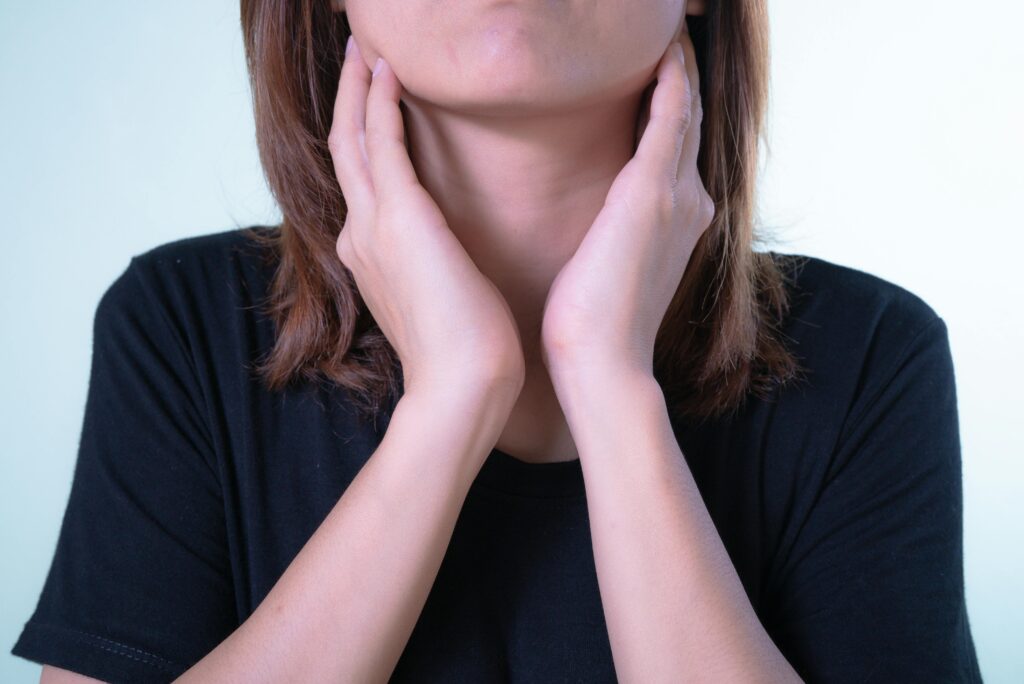
The temporomandibular joints play a crucial role in speech and chewing. Commonly known as TMJs, these important joints can wear over time or become injured for a variety of reasons. When the TMJs become a source of pain, the neck area can quickly develop secondary discomfort.
Many patients live with these symptoms without realizing the source. If you’re experiencing jaw pain alongside neck tension, your TMJs may be the underlying issue. Call Comprehensive Spine and Pain today at 405-601-4227 to schedule an evaluation and find lasting relief.
The TMJs are a complex network of bone, muscle, and connective tissue that allows you to speak, chew, and move your jaw smoothly. TMJ disorders develop when these joints become irritated, inflamed, or misaligned. Common causes of damage to the TMJs include:
Understanding the muscular connection between the TMJs and the neck helps explain why jaw dysfunction often leads to persistent neck tension and upper spine discomfort. The TMJs are surrounded by muscles that extend into the face, head, and upper spine.
When the jaw becomes unstable or inflamed, nearby muscles often compensate. This can lead to tightness or fatigue in surrounding areas, including the neck. Inflammation and overuse of these muscles can create a chain reaction that pulls on structures in the upper back and shoulders. This makes TMJ-related neck pain a form of referred or secondary pain.
Poor posture, especially forward head tilt from screen use, can make the problem worse by keeping the jaw and neck in constant strain. As a result, some patients develop tension headaches, limited jaw movement, or chronic tightness in the upper neck and shoulders. With an accurate diagnosis and effective treatment, individuals suffering from this common type of secondary pain can find long-term relief.
TMJ disorder can cause a range of symptoms that sometimes overlap with other conditions. For many patients, jaw discomfort is only one symptom. The proximity of the jaw to the neck and other parts of the body can lead to neck pain, tension, or stiffness.
Muscle tension caused by a TMJ dysfunction can radiate into the upper neck, shoulders, and even the base of the skull. These symptoms are especially common in people who clench their jaw, grind their teeth, or maintain poor posture for extended periods.
Common TMJ-related neck issues could include:
In some cases, chronic neck strain can worsen tension around the jaw and contribute to TMJ symptoms. By addressing the muscular and structural issues in the neck, patients may experience relief not only in the neck itself but in the jaw as well.
Our neck and spine injury team, led by board-certified medical doctors, can manage the secondary effects of TMJ. Our treatments can be especially effective when you are experiencing neck muscle tension and inflammation. When the muscles around the jaw remain tight or overused, they often trigger strain and dysfunction in the surrounding cervical muscles.
At Comprehensive Spine and Pain, our focus is on restoring function and relieving pain through non-surgical means and without an overreliance on prescription pain meds. Depending on the severity and location of your symptoms, your pain treatment plan may include:
Chronic neck strain may contribute to TMJ symptoms. By relieving pressure and tightness in the neck, patients can experience improvement in jaw function and fewer episodes of discomfort. If you’ve been living with persistent tension, headaches, or pain tied to jaw movement, targeted treatment may offer the relief you’ve been missing.
If you are living with persistent neck tension, one potential cause may be your TMJs. While we do not treat the jaw directly, our team at Comprehensive Spine and Pain focuses on relieving the muscular strain and inflammation that can affect the neck.
Call Comprehensive Spine and Pain today at 405-601-4227 to schedule an evaluation and find out how we can help with TMJ-related neck pain.