Call Now: 405-601-4227

Current Patient And Need To Get In Touch?
Contact Us Here
Call Now: 405-601-4227
Wound Care
Home » Services & Conditions Treated » Wound Care
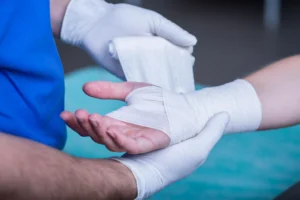 When a wound is not healing the way it should, the reasons are often more complex than the injury itself. For patients managing chronic pain conditions, nerve damage, or recovering from a procedure, wound care requires more than a bandage and time. At Comprehensive Spine and Pain, our team provides advanced wound care as part of a fully integrated approach to your health.
Call us at (405) 601-4227 or contact us online to schedule an appointment.
 Our practice is built around having everything you need in one place. Four double board-certified pain management doctors oversee your care, and our in-office procedure rooms mean you receive treatment without the complexity of a separate hospital visit.
For patients who are already managing a chronic condition or recovering from a pain management procedure, coordinated wound care matters. We treat wound healing as part of your full care plan, not as an isolated issue that gets passed off to another provider. When wound complications arise in the context of chronic illness or post-procedure recovery, we address them with the same level of attention and expertise we bring to every aspect of your care.
Our team evaluates and manages a range of wound types, with particular experience treating wounds that arise in patients with complex medical histories:
If you are unsure whether your wound requires professional attention, contact us. Early evaluation prevents manageable problems from becoming serious complications.
 Certain conditions that we regularly treat at Comprehensive Spine and Pain have a direct impact on how wounds heal.
Diabetic neuropathy reduces sensation in the feet and lower legs, which means wounds can develop and worsen before a patient is even aware of them. Reduced blood sugar regulation also impairs the immune response and tissue repair process, making even minor wounds a potential source of serious infection.
Complex regional pain syndrome and other chronic pain conditions can affect circulation and tissue health in the affected limb. Wounds in these areas often heal more slowly and may require closer monitoring to prevent complications.
Patients recovering from spine procedures, nerve blocks, or other pain management interventions may also experience healing challenges at the procedure site, particularly if their baseline health involves any of the factors above. We monitor these patients closely and intervene early when healing is not progressing as expected.
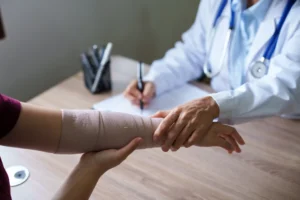 Wound healing unfolds in overlapping stages. In the first hours after an injury, clotting slows bleeding and seals the wound. Over the following days, inflammation brings immune cells to the area to clear bacteria and damaged tissue. New tissue then begins to form, and over weeks to months, the wound strengthens and matures.
For most people, this process moves forward without complication when the wound is kept clean, protected, and free from repeated trauma. For patients with chronic conditions, however, any stage of this process can be disrupted. Poor circulation limits the delivery of oxygen and nutrients that the tissue needs to repair itself. Nerve damage can mask the warning signs that something is wrong. Immune dysfunction slows the clearance of bacteria and increases the risk of infection.
This is why wound care for our patient population requires more than general guidance. It requires providers who understand the underlying conditions that affect healing and can respond when the process goes off course.
 Minor wounds often respond well to consistent at-home management: gentle cleaning with mild soap and water, a thin layer of antibiotic ointment, daily bandage changes, and careful monitoring for early signs of infection. For a healthy patient with a straightforward injury, these steps are frequently sufficient.
For patients with diabetes, neuropathy, circulatory problems, or a history of slow-healing wounds, home care has real limits. The signs that a wound is deteriorating can be subtle or absent entirely when nerve damage reduces sensation. A wound that appears stable on the surface may be worsening in deeper tissue.
If your wound is not improving after a week of consistent home care, if you have an underlying condition that affects healing, or if you notice any signs of infection, contact Comprehensive Spine and Pain. Prompt professional evaluation is the most reliable way to prevent a manageable wound from becoming a long-term problem.
When standard wound care is insufficient, our team has access to advanced treatment options tailored to the complexity of our patients’ needs. Depending on your wound type and underlying condition, care may include:
Because we treat the whole patient rather than the wound in isolation, our approach addresses both the injury and the conditions that are making it harder to heal. As a practice that offers both interventional pain management and medication management under one roof, we can adjust your broader treatment plan when wound complications arise, without sending you to a separate provider.
Signs of infection include increasing redness around the wound edges, warmth, swelling that worsens after the first day or two, pus or cloudy discharge, an unpleasant odor, and fever. Patients with diabetes or neuropathy should be especially vigilant, as reduced sensation can mask early warning signs. If you notice any of these, seek professional wound care promptly.
Healing time depends on the size, depth, and location of the wound, as well as your overall health. Minor surface cuts may close within a week. Deeper wounds or those in high-movement areas can take several weeks. Wounds in patients with diabetes, neuropathy, or circulatory problems often take longer and benefit from professional monitoring rather than a wait-and-see approach.
Yes. Adequate blood flow delivers the oxygen and nutrients the tissue needs for repair. Conditions that reduce circulation, including peripheral vascular disease and diabetes, can significantly slow healing and increase the risk of chronic wounds that do not close properly without intervention. This is one reason wound care for patients with these conditions is best managed by a team familiar with the underlying disease process.
Yes. Patients with peripheral neuropathy often have reduced or absent sensation in the affected areas, which means a wound can develop or worsen without causing noticeable pain. Regular visual inspection and professional monitoring are important safeguards for patients who cannot rely on pain as a warning signal.
If you are dealing with a wound that is not healing as expected, or if an underlying condition makes you more vulnerable to complications, Comprehensive Spine and Pain is ready to help. Our team provides advanced, patient-focused wound care in a comfortable in-office setting, coordinated with every other aspect of your treatment.
Call us at (405) 601-4227 or contact us online to schedule your appointment today.